
Gemstone Treatments: A Comprehensive Guide
Here's something the jewellery trade has known for a long time, and that consumers are increasingly catching on to. The vast majority of coloured gemstones on the market today have been treated in some way. That ruby on the showcase? Almost certainly heated. The emerald in a custom engagement ring? Almost certainly oiled. The blue topaz pendant? Irradiated, without question.
This isn't a scandal. Gemstone treatments aren't new. Heat treatment was practised in ancient Sri Lanka over a thousand years ago, and oiling emeralds is a tradition that predates the modern jewellery industry by centuries. The real questions worth asking are about disclosure, permanence, and how treatment affects value.
For wholesale buyers, retailers, designers, and informed consumers alike, understanding the treatment landscape isn't optional. It's the difference between making confident purchases and having a potentially reputation destroying problem on your hands. Here's what you need to know.
Why Gemstones Are Treated in the First Place
Most rough gemstone material does not come out of the ground looking like the polished, vibrant stones you see in a showroom. Colour may be uneven, inclusions may obscure clarity, and natural fractures may compromise appearance or durability. Treatment is how the industry bridges the gap between geological reality and consumer expectation.
It helps to think about treatments in two broad categories. Some treatments accelerate or complete processes that nature itself performs. Heat, for instance, mimics the geothermal conditions that would otherwise occur over millions of years deep in the earth. Other treatments introduce foreign material into the stone, such as oil, resin, or glass, or alter the stone's chemistry by diffusing elements into its surface. The distinction matters because it shapes how the trade views each treatment and how it affects long-term value.
The Treatment Spectrum
Not all treatments are created equal. A useful way to think about them is as a spectrum:
- Universally accepted: Traditional heat treatment of sapphire and ruby. Disclosed as a matter of course but rarely a barrier to sale.
- Standard and disclosed: Oiling of emeralds. Expected by the trade and the consumer alike.
- Disclosed and value-reducing: Glass-filled rubies, beryllium-diffused sapphires. Legal and saleable, but at substantially lower prices.
- Controversial or problematic: Any treatment that goes undisclosed, regardless of what it is. The treatment itself is rarely the real problem — the lack of disclosure is.
Where a treatment sits on this spectrum determines almost everything about how a stone should be priced, sold, and cared for.
Heat Treatment: The Industry Standard
Heat treatment is, without exaggeration, the foundation of the modern coloured stone trade. The majority of sapphires and rubies on the market have been heated, often to temperatures exceeding 1,600°C, to improve colour and clarity. Tanzanite is heated almost universally to produce its signature violet-blue. Have you ever seen an unheated Tanzanite? It looks like a completely different stone. Most aquamarine starts as greenish material and is heated to produce the pure blue consumers expect. Citrine, in commercial quantities, is heated amethyst.
Aquamarine is also a category where buyers need to be alert to a related pitfall. Some deeply saturated blue beryls sold as aquamarine are actually Maxixe beryl, a distinct variety whose colour comes from irradiation rather than iron, and which fades on exposure to light or heat. Because Maxixe can appear more saturated than fine aquamarine at first glance, it can catch out even experienced buyers. We cover Maxixe and how to identify it in a separate article.
What heat does varies by stone, but the underlying mechanism involves altering the behaviour of trace elements within the crystal lattice and dissolving microscopic inclusions known as silk. The result is often a cleaner, more vivid stone that still retains its natural character.
The trade accepts heat treatment because it is permanent, stable, and chemically indistinguishable from what nature could theoretically produce given enough time and pressure. A heated sapphire is still, fundamentally, a sapphire — the corundum itself has not been adulterated.
That said, the premium for unheated stones is real, and it can be substantial. Recent market data reported by Guild Gem Laboratories and industry surveys through 2025 and 2026 show unheated fine rubies commanding a 100% to 300% price premium over heated stones of the same size and colour. In current terms, a 2-carat unheated Burmese ruby of high quality can trade around US$35,000 per carat, while an equivalent heated stone runs closer to US$12,000 per carat. For fine unheated Madagascar sapphire over 5 carats, supply has reportedly fallen by around 70% in recent years, pushing prices for premium unheated material sharply higher. Buyers seeking these premium unheated stones should always insist on documentation from a major laboratory.
Oiling and Resin Filling: The Emerald Question
If heat is the standard for corundum, oiling is the standard for emerald. Emeralds are notorious for their internal fractures — so much so that the trade has its own poetic term for them, "Jardin", French for garden. These fractures are filled, traditionally with cedar oil and increasingly with synthetic resins, to improve clarity and reduce the visibility of imperfections.
Major laboratories grade the extent of clarity enhancement on a scale: none, insignificant, minor, moderate, and significant. The lower end of the scale indicates a stone where the filling is barely detectable, and the underlying clarity is genuinely fine. The higher end indicates a stone whose appearance depends substantially on the filling material remaining in place.
This matters for two reasons. First, price scales sharply with the degree of enhancement. An emerald with no clarity enhancement is exceptional and priced accordingly. Second, the filling material can degrade over time. Oil can dry out, and resin can yellow. Emeralds often need to be re-oiled after years of wear, which is why ultrasonic cleaners and steam are absolute no-goes for emerald jewellery.
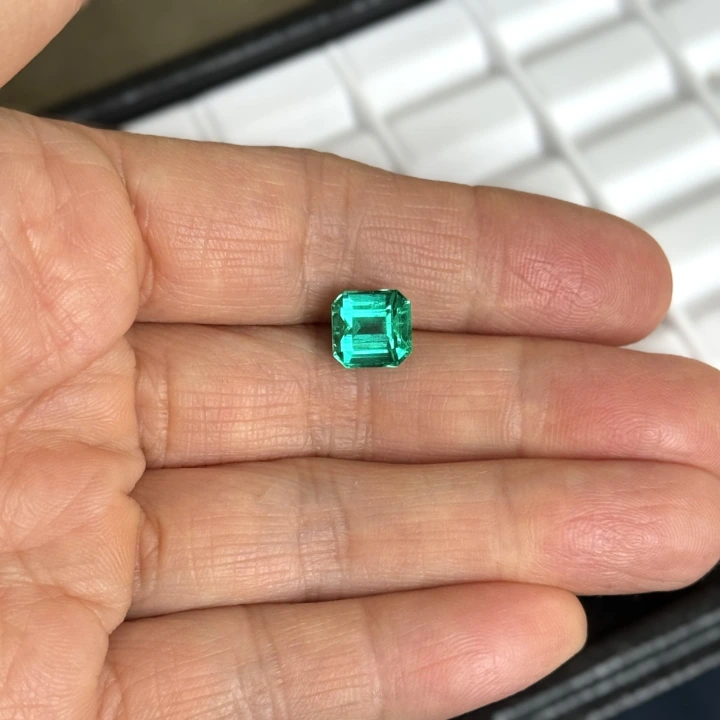
A truly untreated, no-oil emerald with fine colour and clarity is one of the rarest objects in the coloured stone trade. If a stone is being represented as such, the lab report should say so explicitly.
Diffusion Treatments: Where Disclosure Matters Most
Diffusion is where the conversation gets more complicated. In surface diffusion, colour-causing elements are introduced to the outer layer of a stone via high-temperature treatment with chemical additives. In lattice diffusion, most notoriously beryllium diffusion of corundum, the element penetrates more deeply and produces vivid orange, yellow, and Padparadscha-like colours.
The early 2000s saw a significant trade controversy when beryllium-treated Padparadscha sapphires entered the market without proper disclosure. The result was a crisis of confidence that took years to resolve and prompted significant advances in lab detection methods.
Today, diffusion-treated stones are legal, saleable, and have a legitimate place in the market — but they must be disclosed, and they sell at a fraction of the price of natural-colour equivalents. A beryllium-diffused orange sapphire may look stunning in a piece of jewellery, but it is not, commercially speaking, the same product as an unheated orange sapphire from Sri Lanka.
Fracture Filling and Glass-Filled Rubies
Of all the treatments in common circulation, lead-glass-filled ruby is the one that causes the most retailer headaches. These are stones, often originally near-worthless heavily fractured corundum, that have been infused with lead-based glass to fill the fractures and produce a seemingly clean, red stone at a fraction of the cost of real ruby.
The problem is not that these stones exist — there is a market for inexpensive red jewellery. The problem is when they are sold as ruby without proper disclosure. Glass-filled stones can be damaged by household chemicals, ultrasonic cleaners, even contact with hot water. They are emphatically not the same product as a heated or unheated natural ruby, and they do not belong at the same price point.
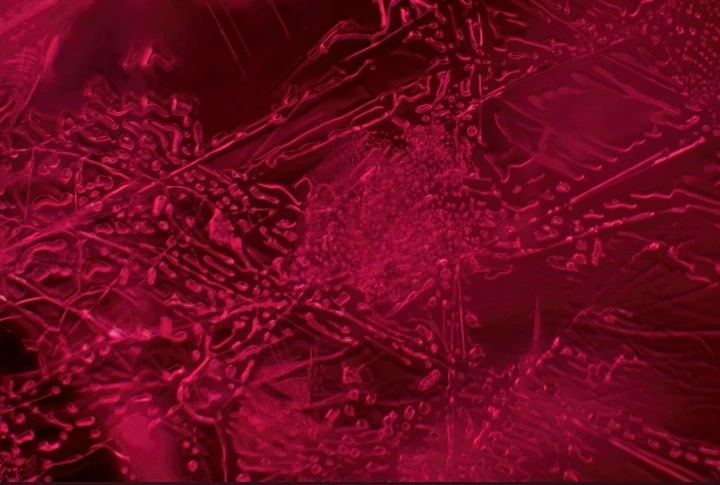
Gemmologists are trained to spot them by characteristic gas bubbles trapped in the filling, by a flash effect when the stone is rotated under light, and by the distinctive way they fluoresce under certain lighting conditions. This is why it is crucially important that rubies (and all quality gemstones) are sourced from reputable suppliers trained in gemmology.
Irradiation and Other Treatments
A handful of other treatments deserve mention. Blue topaz, as encountered in virtually every jewellery store in the world, starts as colourless or pale brown topaz and is irradiated, then heated, to produce its various blue shades. The treatment is stable and the resulting stones are perfectly safe. Residual radioactivity is monitored and regulated.
Some coloured diamonds, particularly blue and yellow, are produced by irradiation or HPHT (high-pressure, high-temperature) treatment. These are disclosed on lab reports and priced accordingly.
Coating and dyeing are less common in fine jewellery but worth mentioning. Coated topaz, sometimes marketed under fanciful trade names such as 'Mystic Topaz', has colour applied via a thin film on the surface that can wear off over time. Dyed stones (porous materials like turquoise or low-grade emerald with dye introduced into fractures) should always be disclosed and priced as treated material.
On Lab Reports and Documentation
Lab reports are a critical piece of the treatment disclosure puzzle. For high-value stones (fine unheated ruby, untreated Kashmir sapphire, natural-colour Padparadscha, or fine emerald where origin materially affects value) a report from a top-tier laboratory such as SSEF, Gübelin, GRS, or GIA is essentially non-negotiable. But lab reports are not universally necessary, and understanding when certification adds real value versus when it simply adds cost is a topic that deserves its own discussion. See our companion article on gemstone lab reports for a full treatment of which laboratories to trust, when a report is essential, and why a certificate does not automatically make a stone a better buy.
How Treatments Affect Wholesale Value
For retailers and designers thinking about pricing and positioning, the treatment status of a stone has direct commercial implications.
A heated commercial-quality sapphire may sell for a few hundred dollars per carat. An unheated stone of comparable size and appearance from a premium origin can run thousands per carat or more. A glass-filled ruby may cost ten dollars per carat at wholesale. An unheated Burmese ruby of fine colour can run tens of thousands per carat. The stone itself is not the only thing being priced, the treatment status, the origin, and the supporting documentation are all part of the value equation.
The practical implication is that representing a stone accurately to your customer is not just an ethical matter but a commercial one. A buyer who believes they are purchasing an unheated stone and later discovers otherwise will not be a buyer again, and the reputational damage extends well beyond that single transaction.
Care Considerations by Treatment Type
A quick practical reference for retailers and designers handing off jewellery to customers:
- Heat-treated stones (sapphire, ruby, tanzanite, aquamarine): Generally as durable as untreated stones of the same species. Standard care applies.
- Oiled or resin-filled emeralds: No ultrasonic cleaning, no steam, no harsh detergents. Clean gently with warm soapy water. Periodic re-oiling by a qualified gemmologist is normal and expected over a stone's lifetime.
- Glass-filled rubies: Treat with extreme caution. Avoid heat, chemicals, ultrasonic cleaners, and any repair work that involves a torch. These stones are not suitable for sizing, soldering, or torch tip work.
- Diffusion-treated stones: Avoid recutting or repolishing. The colour layer in surface-diffused stones is thin enough that significant repolishing can remove it. Lattice-diffused stones are more stable but should still be handled with care during repair.
- Coated stones: Avoid abrasives, ultrasonic cleaners, and chemicals. The coating is the most vulnerable part of the stone.
- Irradiated stones: Stable and require no special care beyond what is appropriate for the stone species.
The Honest Conversation
Gemstone treatments are not the enemy of the jewellery trade. They are the reason much of the trade exists at the scale and price points it does. The vast majority of beautiful coloured stones in circulation today owe their appearance, at least in part, to some form of treatment, and there is nothing inherently wrong with that.
What is wrong is undisclosed treatment. Selling a glass-filled ruby as a natural ruby, or a beryllium-diffused sapphire as a natural-colour stone, or an oiled emerald as untreated. These practices damage individual buyers, but they also erode confidence in the trade as a whole, which hurts every honest dealer in the chain.
The path forward, both ethically and commercially, is the same: full disclosure, established trade networks, supported by reputable lab documentation where necessary, with pricing that reflects what the stone actually is. Customers, whether they are independent jewellers buying parcels or members of the public buying a single engagement stone, respond well to being treated as intelligent adults who can handle the truth about what they are purchasing.
If you have questions about the treatment status of any stone in our inventory we are always happy to have that conversation.