Basalt or Metamorphic? The Geology That Explains Sapphire Colour, Clarity and Value
Two sapphires of near identical size can sit side by side on a dealer's tray and differ in price by a factor of fifty. Ask why, and the usual answers arrive: colour, clarity, origin, treatment. All true. But underneath every one of those answers sits a deeper explanation that the trade rarely spells out. Sapphires form in two fundamentally different geological settings, and that difference explains most of what a buyer actually notices. The colour. The clarity. Whether the stone needed heat. And, in the end, the price.
This article is a guide to that two-way split: metamorphic sapphires versus basalt-related sapphires. It covers what each formation type produces, profiles the origins that matter to the trade (Kashmir, Burma, Ceylon, Madagascar, Australia, Thailand, Africa and Montana), and explains where green and parti-coloured sapphires fit in the picture. One honest note before we begin: the two-category model is the single most useful framework in sapphire, and it is also a simplification that nature does not always respect. We will get to the exceptions, because they are some of the most interesting stones in the market.
What are the two ways sapphires form?
Sapphires form either deep in the Earth's crust through metamorphism, where heat and pressure recrystallise aluminium-rich rock over immense timescales, or near the crust-mantle boundary in association with alkali basalt magma, which carries them to the surface as passengers in volcanic eruptions.
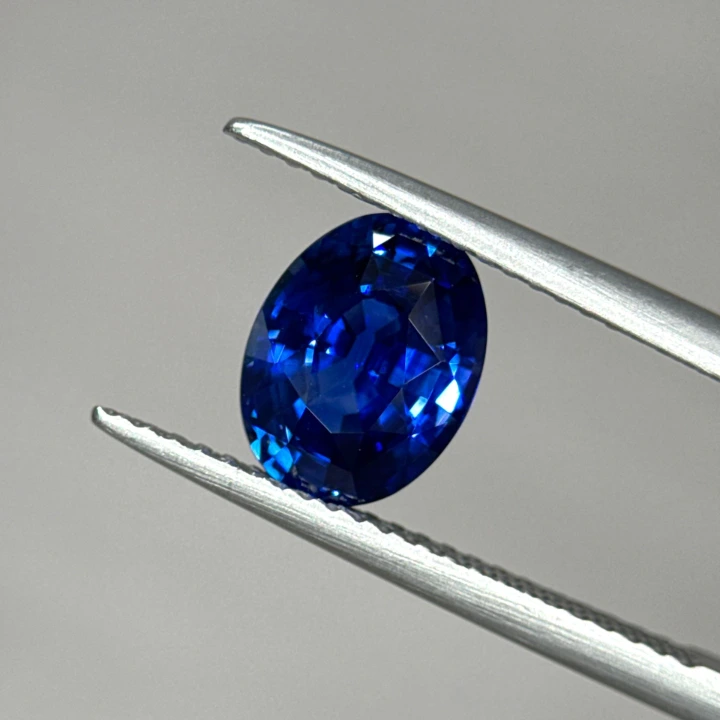
Metamorphic sapphires are the products of mountain-building. When tectonic collisions subject aluminium-rich rocks to intense heat and pressure, the minerals recrystallise, and under the right chemistry, corundum forms. The classic metamorphic origins are Kashmir, Burma, Sri Lanka, southern Madagascar and Tanzania. These stones grew slowly, deep in the crust, during the great orogenies covered in our article on the ages of gemstones: the Pan-African event around 750 to 450 million years ago, and the Himalayan collision beginning around 45 million years ago.
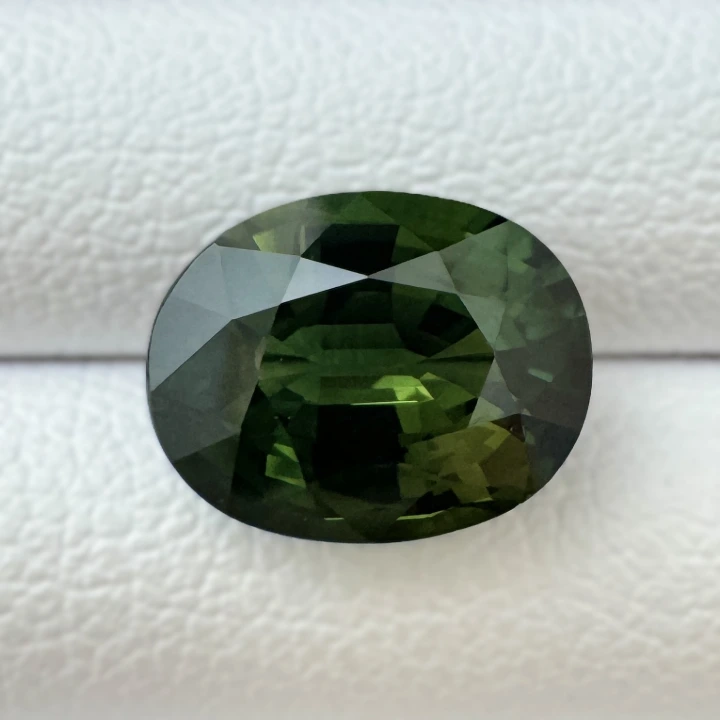
Basalt-related sapphires (also called magmatic) crystallised at far greater depth, near the boundary between crust and mantle, and would have stayed there forever if not for volcanic activity. Erupting alkali basalt picked them up as xenocrysts, foreign crystals along for the ride, and delivered them to the surface. The classic basalt-related origins are Australia, Thailand, Cambodia, Nigeria and parts of China and East Africa.
The two types are chemically distinguishable. Research by Peucat and colleagues published in 2007 established that basalt-related sapphires carry high iron (roughly 2,000 to 11,000 parts per million) and high gallium, with low magnesium, while metamorphic sapphires run much lower in iron (typically under 3,000 ppm) with higher magnesium. GIA's landmark study on blue sapphire origin determination (Gems & Gemology, Winter 2019) uses exactly this trace element chemistry, alongside inclusion analysis, as a primary tool for separating the two groups. When a laboratory issues an origin opinion, this geology is much of what sits behind it.
Why does formation type affect colour?
Iron is the key. The iron-rich chemistry of basalt-related sapphires pushes colour toward darker, inkier blues, and toward green and yellow. The lower-iron chemistry of metamorphic sapphires permits the purer, brighter blues that the market has prized for centuries.
Blue in sapphire arises mainly from an interaction between iron and titanium. In a low-iron metamorphic stone, that interaction can produce the bright cornflower and royal blues of the classic fine sapphire. In a high-iron basalt-related stone, additional iron-driven colour mechanisms come into play, darkening the blue and frequently adding a green or steely secondary tone. Push the iron chemistry further and you leave blue altogether, into the greens, teals and yellows.
This single fact explains a great deal of trade history. It is why the finest classic blues have overwhelmingly come from metamorphic deposits. It is why so much basalt-related material has historically been heat treated, to lighten and purify colour that came out of the ground dark. And it is why the modern fashion for teal and green sapphires has been such good news for basalt-related and non-classical origins: the market has begun to prize exactly what their chemistry naturally produces.
Why does formation type affect clarity?
Formation conditions leave fingerprints inside the stone. Metamorphic sapphires characteristically carry fine rutile silk, microscopic needle-like inclusions that, in modest amounts, scatter light softly and give the finest stones a velvety, almost sleepy quality. Kashmir's legendary appearance is silk doing its best work. Too much silk, on the other hand, clouds the stone, which is why heat treatment (which dissolves silk) became standard for much metamorphic material.
Basalt-related sapphires carry a different inclusion suite, reflecting their deep origin and their violent journey to the surface. They are often comparatively clean of silk but can show other features, and their colour zoning is frequently stronger. These internal differences are not just cosmetic. They are among the diagnostic features laboratories read when forming an origin opinion, as our article on lab reports discusses.
The metamorphic origins
Kashmir. The benchmark against which all blue sapphire is measured. Kashmir sapphires formed in the Himalayan orogeny and were discovered in the early 1880s after a landslide exposed the deposit; the primary source was substantially worked out within roughly a decade, and meaningful production never resumed. The stones are famous for a velvety cornflower blue with a soft glow born of fine silk. Rarity, history and that singular appearance make fine Kashmir stones the most valuable sapphires in the world, and the origin premium on a lab-confirmed Kashmir stone exceeds what colour and clarity alone would justify.
Burma (Myanmar). Metamorphic, Himalayan, and historically second only to Kashmir in prestige. Fine Burmese sapphires show a rich, saturated royal blue with excellent transparency. Buyers should be aware that Myanmar's gem trade carries well-documented ethical and sanctions complications, which we cover honestly in our article on gemstone ethics.
Ceylon (Sri Lanka). The workhorse of the fine sapphire market for over two thousand years. Ceylon sapphires are metamorphic, Pan-African, and around 600 million years old. Their signature is a bright, lively, lighter-toned blue with excellent brilliance, alongside an enormous range of fancy colours including the finest padparadscha. Sri Lanka is also the world's premier sapphire cutting centre, which means Sri Lankan expertise touches far more of the global sapphire supply than Sri Lankan geology does.
Madagascar. The modern powerhouse. Southern Madagascar's deposits, discovered in the 1990s, are metamorphic and geologically kin to Sri Lanka's, so much so that laboratories sometimes struggle to separate the two origins. Madagascan material spans the full quality spectrum, and at the top end its finest blues stand comparison with Ceylon and approach Burma. One important nuance: Madagascar is not geologically uniform. The island also hosts basalt-related deposits, notably in the far north, which produce a different palette. We return to this below, because it matters for green and parti-coloured stones.
The basalt-related origins
Australia. The archetypal basalt-related source, and for decades one of the world's largest sapphire producers by volume. Australian stones are iron-rich, running to dark, inky blues, deep greens, yellows and strongly zoned combinations. Historically much of this production was heat treated, cut in Thailand and sold into commercial channels, often without its origin celebrated. That story is changing. The teal and parti-coloured stones that Australian geology produces naturally have become genuinely fashionable, and Australian sapphire is increasingly marketed proudly under its own name.
Thailand. Basalt-related deposits in Chanthaburi and Kanchanaburi have produced iron-rich, dark-toned sapphires for generations. But Thailand's greater significance to the sapphire trade has never really been its mines. Thailand is the historical heart of corundum heat treatment and a global cutting and trading hub, processing stones from many origins. A great many sapphires described in the market by their Thai journey were born somewhere else entirely.
Africa beyond Madagascar. "African sapphire" resists a single label, and honesty requires saying so. Nigerian and Rwandan material is basalt-related. Tanzania hosts metamorphic deposits along with sources like Umba and Songea that GIA classifies as non-classical, sharing characteristics of both groups. Treating Africa as one origin is a trade convenience, not a geological reality, and the continent's deposits span the entire framework this article describes.
Where do green and parti-coloured sapphires fit?
Green and parti-coloured sapphires sit at the iron-rich, strongly-zoned end of the sapphire spectrum. That chemistry is most characteristic of basalt-related and non-classical deposits, though these colours occur across formation types and from several origins, including Madagascar.
Green sapphire is largely an iron story. The same elevated iron that darkens a basalt-related blue produces green when iron-driven colour mechanisms dominate the titanium-iron blue. This is why green sapphire is so strongly associated with iron-rich sources: Australia, Thailand, and non-classical deposits such as Montana's Rock Creek.
Parti-colour is a zoning story. A parti sapphire shows two or more distinct colours in a single stone, most often blue and green or blue and yellow, because the chemistry around the growing crystal changed during its formation. Dramatic parti-colour is a hallmark of basalt-related and non-classical material, though some degree of colour zoning occurs in sapphires of every origin.
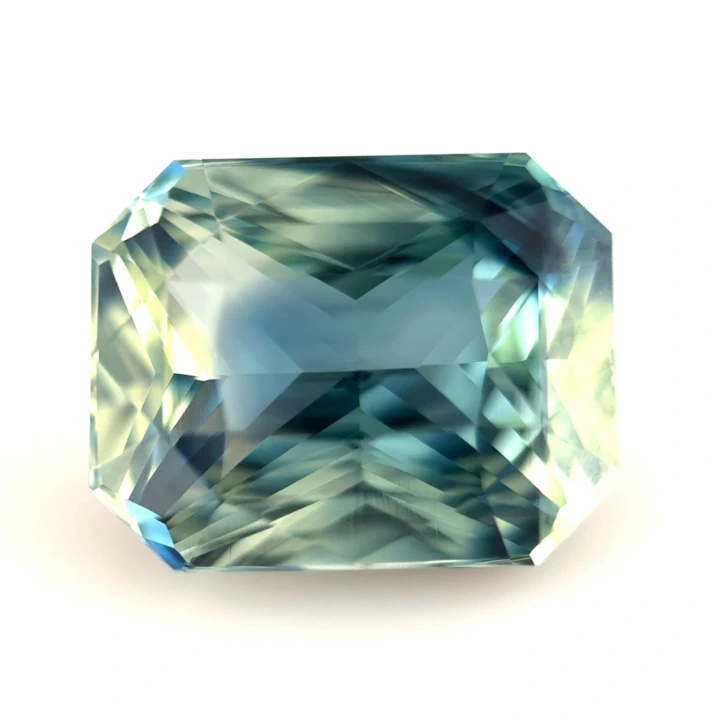
Now the Madagascar nuance promised earlier. Madagascar's famous metamorphic deposits in the south are the source of its fine blues. But the island's geology is diverse, and its northern deposits around Ambondromifehy are basalt-related, producing exactly the iron-rich palette in which greens and partis thrive. A green or parti-coloured sapphire attributed to Madagascar is therefore entirely plausible. It simply reflects a different chapter of Madagascan geology than the one that made the island's blue-sapphire reputation.
An honest note on certainty, in the spirit of our articles on lab reports and ethics. For most commercial green and parti sapphires, formation type and precise origin are inferred from supplier knowledge rather than confirmed by laboratory trace element analysis, because origin testing is rarely economic at commercial price points. When we describe such stones by origin, we are conveying our supplier's attribution, grounded in long relationships and deep familiarity with the material they handle. That is the honest standard across the commercial coloured stone trade, and buyers deserve to know it.
What should not get lost in the technicalities is this: green and parti sapphires are not failed blues. Their colours are the direct, natural expression of the geology that made them, they are increasingly sought after in the designer and bespoke market for precisely that individuality, and no two parti stones are ever quite alike. Understanding the geology lets a buyer appreciate these stones for what they genuinely are.
The exception that proves the rule: Montana
Montana sapphires are the clearest demonstration that nature never signed up to the two-category model. The famous Yogo Gulch deposit is igneous, yet its stones behave more like fine metamorphic sapphires than like anything from Australia or Thailand.
Yogo sapphires formed around 48 million years ago in a lamprophyre dike, an unusual vertical sheet of igneous rock cutting through central Montana's limestone. That is neither an alkali basalt setting nor a metamorphic one. Yet the stones themselves, as documented in GIA's study of the deposit (Gems & Gemology, Summer 2018, Renfro, Palke and Berg), show a naturally even blue to violet colour, unusually high clarity, minimal zoning, and, remarkably, no need for heat treatment at all. A Yogo is essentially guaranteed untreated, a rarity in the modern sapphire market. Their main limitation is size, with clean stones above a carat genuinely scarce.
Montana's other deposits (Rock Creek, Missouri River, Dry Cottonwood Creek) are secondary deposits producing the teals, greens, golden tones and parti-colours that have driven the modern enthusiasm for Montana sapphire. Laboratories classify Montana among the non-classical origins precisely because it refuses to sit neatly in either box.
Montana is the concrete reminder that the two-category framework is a lens, not a law. The best gemmologists hold the model and its exceptions in mind at the same time.
How does formation type affect value?
Formation type does not set price directly. But it correlates strongly with the colour and clarity that do, which is why metamorphic origins dominate the top of the market while basalt-related origins have historically anchored the commercial end. The picture, however, is shifting.
The most valuable sapphires in the world are metamorphic: fine Kashmir, Burma, Ceylon and top Madagascan stones, where low-iron chemistry allows the bright, pure blues the market has prized for centuries, reinforced by origin histories that carry their own premium. Basalt-related material from Australia and Thailand historically filled the commercial and mass-market tiers, its darker iron-rich blues frequently heat treated and sold without fanfare.
Two developments complicate that neat hierarchy. First, the rise of teal, green and parti-coloured sapphires as genuinely fashionable stones has created real demand, and real premiums, for material whose character comes straight from iron-rich and non-classical geology: Montana, Australia, and the greens and partis moving through the trade from multiple origins. Second, origin prestige has become so valuable at the top end that lab origin reports now materially affect price, which is exactly when a report from a top-tier laboratory earns its cost, as our lab reports article sets out.
The practical takeaway is the one that runs through everything we publish: buy the stone, not the label. Formation type and origin explain a sapphire's character. They do not guarantee its quality. A vividly zoned parti from a basalt-related deposit, or a bright Madagascan blue without a prestige name attached, can be a far better purchase than a mediocre stone trading on the word Kashmir.
What should a buyer take from all this?
The metamorphic versus basalt-related split is the most useful single framework for understanding why sapphires differ. Metamorphic origins (Kashmir, Burma, Ceylon, southern Madagascar) skew toward the bright, pure blues that dominate the top of the market. Basalt-related origins (Australia, Thailand, parts of Africa and northern Madagascar) skew darker and more iron-rich, anchoring the commercial market and supplying the distinctive greens, teals and partis the modern market increasingly loves. Non-classical origins like Montana defy the binary altogether, and reward being understood on their own terms.
Origin affects value through real optical differences and through brand history, and laboratory origin opinions matter most exactly where a prestige origin claim is doing heavy lifting in the price. For commercial stones, origin attributions rest on supplier knowledge and relational trust, which is the honest standard of the trade and should be described as such.